About Kinetic Theory Model
For demonstration of the kinetic theory of gases explaining the molecular motion of the gases, thinning of air with increasing altitude, increase in pressure / volume with temperature etc. Comprises clear Perspex cylindrical tube mounted on a plastic enclosure with a rubber diaphragm at its lower end and a loose fitting metal cap at its upper end. Just underneath the diaphragm, a piston connected to a low voltage DC motor through eccentric cam, is provided for producing oscillatory motion or vibration of the diaphragm. A pair of colour-coded 4mm socket terminals provided for electrical connection. Includes metal spheres 1/8 and free-sliding cardboard discs for loading at the top.
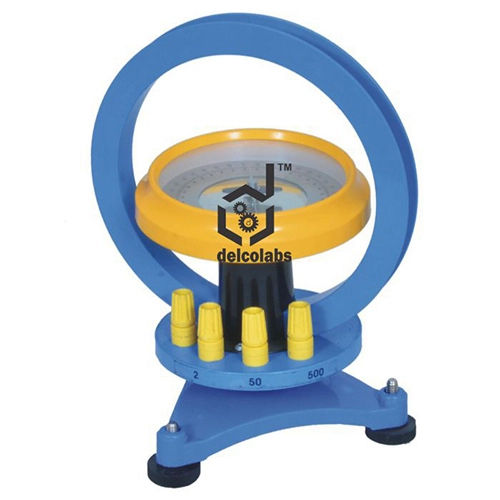
Versatile Design and Material StrengthThis Kinetic Theory Model is crafted from a combination of mild steel and plastic, allowing for both durability and lightness. The blue color offers a distinct visual appeal that enhances its use in laboratory environments. Available in a variety of sizes, it fits diverse experimental setups, making it ideal for researchers, educators, and industrial trainers alike.
Ideal for Industrial and Educational ApplicationsPrimarily intended for laboratories, the Kinetic Theory Model is also suitable for industrial training and demonstrations. Its interactive design helps users understand kinetic theory concepts more tangibly, supporting both basic and advanced learning. Export quality assurance ensures reliability for both domestic and international users.
FAQs of Kinetic Theory Model:
Q: How is the Kinetic Theory Model used in laboratory and industrial applications?
A: The Kinetic Theory Model is utilized for demonstrating the movement of molecules, helping students and professionals visualize kinetic theory concepts. In laboratories, it enhances teaching, while in industrial settings, its used for staff training and system analysis.
Q: What materials are used in constructing the Kinetic Theory Model?
A: The model is manufactured using a combination of mild steel and plastic, providing both strength and lightweight usability. This ensures long-term durability even with frequent handling in laboratories.
Q: When should laboratories consider using this model?
A: Laboratories should consider using this model when precise demonstrations of kinetic theory and molecular motion are required in teaching or research. It is beneficial during physics experiments and industrial training sessions.
Q: Where is the Kinetic Theory Model typically installed or used?
A: This model is commonly found in educational and research laboratories, science classrooms, and industrial training centers, particularly where a clear demonstration of kinetic theory principles is required.
Q: What is the process for setting up the Kinetic Theory Model?
A: Setting up the model involves assembling the mild steel and plastic components as per the provided manual. The varying available sizes cater to different laboratory benches or industrial training setups.
Q: How does this product benefit laboratory and industrial users?
A: The main benefits include enhanced learning through visualization, increased engagement during training, and reliable demonstration of complex kinetic theory principles. It supports better understanding and retention of scientific concepts.








 Send Inquiry


 Send Inquiry


